
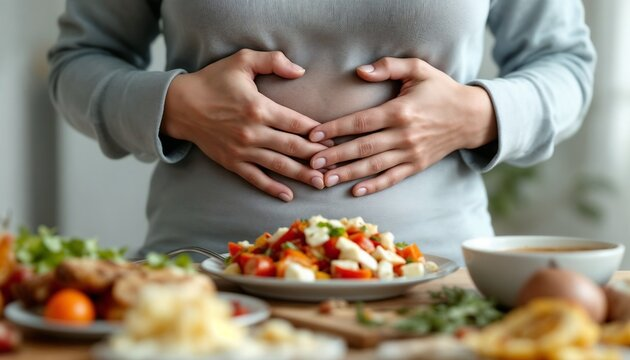
You just finished eating. Maybe it was a great meal, maybe it was something you grabbed on the go, and then right on cue, your stomach starts complaining. That familiar ache, the tight cramping, the bloated heaviness that makes you want to unbutton your jeans and lie on the floor like a dying starfish.
Sound familiar?
You’re not alone. Millions of people deal with stomach pain after eating every single day, and most of them do exactly what you’re doing right now, searching for answers because the pain is real, it’s uncomfortable, and nobody has time for it.
Here’s the good news: in most cases, it’s not as scary as your brain is making it sound. Here’s the slightly frustrating news: it could be any one of several things, and figuring out which one requires paying attention to details most people overlook.
So let’s get into it, the real causes, the sneaky ones, the warning signs, and what you can actually do about it.
First, Let’s Talk About What’s Actually Happening Inside You
Every time you eat, your body launches into this incredible, complicated process. Your stomach starts producing acid, your muscles contract to churn food, enzymes kick in, and your entire digestive system essentially goes to work like a busy factory floor.
When something in that process goes wrong, or gets overwhelmed, pain is how your body files the complaint.
Food enters the stomach, gets broken down into a thick liquid, then moves into the small intestine where nutrient absorption happens, before passing into the large intestine and eventually out. That entire journey can take anywhere from 24 to 72 hours. When any part of that process gets disrupted, pain is usually the first thing you notice.
What most people don’t realize is that your digestive system is also incredibly sensitive to everything happening outside of it. What you drank three hours ago, how well you slept last night, whether you’ve been sitting at a desk all day or actually moving around. Your gut doesn’t operate in isolation. It’s constantly responding to the full picture of how you’re living, not just what you put on your plate.
The location of the pain, the timing, the type of sensation, dull ache versus sharp cramping versus burning, all of these are clues. And once you learn to read them, you stop panicking and start understanding.
The Usual Suspects, And Yes, You’re Probably Guilty of at Least One
Let’s be honest before we get to the complicated stuff. The most common reasons your stomach hurts after eating are embarrassingly preventable.
Eating too fast is the number one culprit. When you inhale your food, you swallow excess air, your stomach doesn’t have time to send fullness signals to your brain, and you end up overdoing it without realizing. It actually takes about 20 minutes for your brain to register that you’re full. Eat faster than that and you’ve already gone too far before the signal ever arrives.
Overeating is closely related but slightly different. Even if you eat slowly, too much food stretches your stomach beyond its comfortable capacity. Your stomach is roughly the size of your fist at rest. Think about that next time you go back for thirds.
Indigestion hits as that heavy, burning, tight sensation in your upper abdomen after a rich or spicy meal, triggered by fatty foods, coffee, alcohol, stress, or eating too close to bedtime.
Gas. Nobody wants to talk about it, but trapped gas creates real pressure and cramping that can feel genuinely alarming when it’s actually just your gut being dramatic about broccoli.
When It’s More Than Just Overeating
If your stomach pain after eating is a regular thing, not just an occasional “I had too much pizza” situation, something else is likely going on.
Food intolerances are one of the most underdiagnosed causes of chronic post-meal discomfort. Lactose intolerance is the big one. Your body simply doesn’t produce enough of the enzyme needed to break down dairy, so every time you have milk, cheese, or ice cream, your gut stages a full protest. Gluten sensitivity and celiac disease work similarly, causing significant digestive distress after eating anything containing wheat. And beyond those two, there’s a whole category of hard-to-digest food components called FODMAPs, found in things like onions, garlic, apples, and legumes, that cause real problems for a surprising number of people who have no idea what’s behind their discomfort.
The clue here is consistency. If the same type of food keeps triggering your pain, that is your body giving you a very clear, very deliberate signal.
Acid reflux is another repeat offender. When the valve between your stomach and your oesophagus doesn’t close properly, stomach acid travels back up where it doesn’t belong. You feel it as a burning in your chest or upper stomach, often worse after large meals, spicy food, or lying down too soon after eating. When this becomes a chronic pattern, it graduates to GERD, and it needs proper management, not just the occasional antacid. Left unmanaged, GERD can damage the lining of your esophagus over time.
And then there’s IBS, irritable bowel syndrome, which affects far more people than most realize and is notoriously difficult to pin down. Cramping, bloating, gas, diarrhea, constipation, sometimes all of the above, sometimes rotating between them without warning. IBS tends to flare in response to specific foods, hormonal changes, and stress. What makes IBS particularly frustrating is that it doesn’t show up on scans or blood tests. Everything looks normal, yet the pain and disruption are very real. Many people spend years being told nothing is wrong before they finally get a proper diagnosis and a management plan that actually helps.
It’s also worth knowing about gastritis and peptic ulcers. Gastritis is inflammation of the stomach lining, often caused by long-term use of painkillers like ibuprofen, too much alcohol, or a bacterial infection called H. pylori. Peptic ulcers have a strange signature: they often feel better right after eating because food temporarily buffers the acid, then the pain comes back an hour or two later once that buffer wears off. If that timing sounds familiar, mention it to a doctor.
Location Matters More Than You Think
Here’s something most articles completely gloss over. Your abdomen isn’t one undifferentiated blob. Different areas correspond to different organs, and where your pain lives is one of your best clues.
- Upper middle (below the breastbone): Indigestion, acid reflux, or gastritis
- Upper right side: Often the gallbladder, especially after a fatty meal, and pain can shoot into the right shoulder or back
- Lower abdomen with bloating and urgency: Points toward IBS or food intolerance
- Lower right side, sharp and severe: Appendix territory, don’t wait this one out
When you talk to a doctor, tell them exactly where it hurts. Not just “my stomach.” That specificity changes everything.
Timing Is Everything, And Most People Never Notice This
Pain that starts during or immediately after eating usually means the problem is in your stomach or upper digestive tract, overeating, indigestion, acid reflux. Your body is reacting to the food before it’s had a chance to move anywhere.
Pain that arrives one to two hours after eating tells a completely different story. Peptic ulcers often feel temporarily better right after eating, then return sharply when acid levels rebound. Gallbladder issues tend to surface in that same window, especially after fatty meals.
Pain that wakes you up in the middle of the night is a different category entirely. A stomach that pulls you out of sleep is trying harder than usual to get your attention, and it usually means acid levels have built up with nothing left to buffer them. Don’t file that one under “probably nothing.”
If your pain shows up at the same point after every meal, that is not a coincidence. Start writing down what you eat and when the pain shows up. Even one week of tracking gives you something real to work with.
The Stress-Gut Connection Nobody Talks About Enough
Your gut has its own nervous system, sometimes called the second brain, and it is in constant, direct communication with your actual brain. When you’re anxious, overwhelmed, or running on empty, your digestive system feels every bit of it. Stress slows digestion, ramps up acid production, triggers cramping, and makes an already sensitive gut far more reactive to foods it normally handles without complaint.
Think about the last time you faced something nerve-wracking, a big meeting, a difficult conversation, a flight you were dreading. Did your stomach act up? That’s not a weakness. That’s biology.
Chronic stress also disrupts your gut microbiome, the ecosystem of bacteria living in your intestines that quietly influences everything from digestion to immunity to mood. It’s one of the reasons two people can eat the exact same meal and have completely different experiences afterward.
What’s worth understanding here is that the relationship runs both ways. A stressed mind upsets the gut, but a struggling gut also feeds anxiety and low mood back to the brain. It’s a loop, not a one-way street. People dealing with chronic digestive issues often find that their mental health takes a hit too, and that treating one without addressing the other rarely gets them very far.
And if your post-meal pain tends to spike during stressful seasons of life, managing that stress isn’t a soft suggestion. It’s a genuine part of treating your gut.
Your Eating Habits Matter More Than You Think

Most people focus on what they eat and completely ignore how they eat, and that second part is where a lot of unnecessary suffering lives.
Eating at your desk while answering emails, eating in the car between meetings, eating standing over the kitchen counter at 9pm because you never got around to a proper dinner, all of it puts your digestive system in a compromised position before the food even lands. Your body digests best when you’re calm, seated, and not splitting your attention seventeen ways. The act of sitting down to eat isn’t just a social nicety. It actually triggers your parasympathetic nervous system, the rest-and-digest mode, which is the state your gut needs to do its job properly.
Meal timing matters too. Skipping meals and then eating a huge one to compensate swings your digestive system between empty and overwhelmed, neither of which is where it wants to be. Spacing meals more evenly throughout the day keeps acid levels steadier, keeps your energy more consistent, and gives your gut a manageable, predictable workload instead of a feast-or-famine pattern it has to keep recovering from.
How you eat is just as important as what you eat. Your gut notices both.
What You Can Actually Do About It
Slow down when you eat. Put the phone away, chew properly, and give yourself at least twenty minutes per meal. Eat smaller portions more frequently rather than two or three large ones that leave your stomach overwhelmed. Keep a food diary for two weeks, patterns reveal themselves faster than you’d expect, and you’ll have something concrete to bring to a doctor if it comes to that.
It’s also worth paying attention to some less obvious triggers. Carbonated drinks, artificial sweeteners, onions, garlic, and even large amounts of water with meals can all quietly make things worse for a sensitive gut.
Cut out the usual irritants temporarily, spicy food, fatty meals, coffee, alcohol, fizzy drinks, not as a permanent sentence, but as an experiment to see what your gut actually objects to.
And please, don’t lie down immediately after eating. Give yourself at least two hours upright. Gravity is quietly doing useful work for you, and ignoring that is one of the easiest ways to turn a manageable situation into a painful one.
If you’ve tried the obvious adjustments and nothing is shifting, consider an elimination diet. Strip your meals down to the most basic foods for two to three weeks, then slowly reintroduce things one at a time. It’s not the most exciting few weeks of your life, but it can give you answers that no amount of Googling ever will.
When to Stop Googling and See an Actual Doctor
Most post-meal stomach pain is annoying, not dangerous. But some symptoms deserve more than a search engine and a wait-and-see approach.
See a doctor if your pain is severe, getting progressively worse, or simply not going away.
These are the ones that matter:
- Blood in your stool or vomit
- Unexplained weight loss
- Severe pain that keeps getting worse
- Fever with stomach pain
- Pain that wakes you from sleep
- Difficulty swallowing or food feeling stuck
- Symptoms lasting more than two weeks
One thing worth saying clearly: a lot of people put off seeing a doctor because they don’t want to seem like they’re overreacting. But digestive conditions that get caught early are almost always easier to treat than ones that have been quietly progressing for months or years. Going in with a food diary, a clear description of where the pain is, and a timeline of when it started isn’t overreacting. It’s exactly what a good doctor wants from you.
Don’t talk yourself out of these. Don’t convince yourself it’s probably nothing. Get it checked.
The Bottom Line
Your stomach hurting after eating is common, usually manageable, and almost always telling you something specific. The mistake most people make is either brushing it off entirely or spiralling into worst-case-scenario thinking at two in the morning.
The smarter move is to pay attention. Where does it hurt? When does it start? What did you eat? How stressed have you been lately? Those details point toward real answers.
Most of the time, slowing down, eating more mindfully, cutting out a few triggers, and managing your stress makes a significant difference. But if something feels persistently wrong, if your gut keeps trying to get your attention and you keep ignoring it, that’s when it’s worth talking to a gastroenterologist. Some things are better caught early than explained later.
It usually knows something before you do.